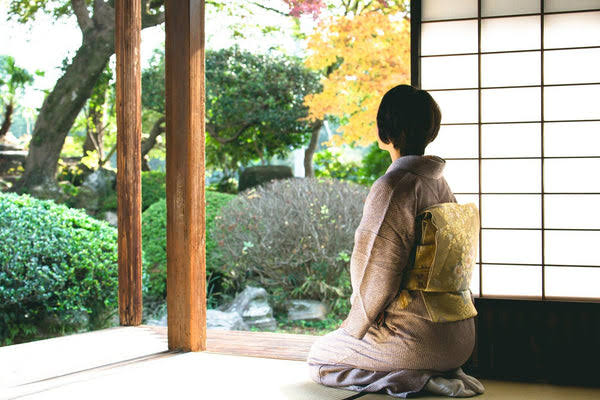
Winter carries a special kind of calm and silence. Everything is stripped bare, slowed down, reduced to what truly matters. In that silence, as the days grow short and nature withdraws into itself, we too are left alone with ourselves—with thoughts that the loudness of everyday life usually silences with ease.
Every winter, the same ritual repeats itself. The calendar turns, the year receives a new number, and we are expected to be more decisive, braver, and more efficient than yesterday. As if January were a personal reset button, and life a project that must have a plan, a deadline, and measurable goals.
And precisely then, while all of nature around us is resting and gathering strength for a new awakening, we often give in to a collective need for a fresh start. We demand more of ourselves, make important life decisions, begin to become a new, better version of ourselves. We require more discipline, more clarity, more determination. As if the new year must begin strongly, visibly, with a plan that leaves no room for hesitation.
Yet with the years, it seems to me that this may be the greatest misunderstanding we have about change. And with time, I feel an increasing resistance to it. Because change—at least the kind that truly matters and lasts—rarely arrives with big words and fixed deadlines. It comes quietly, almost imperceptibly, often at moments when we are ready to admit that we don’t know exactly where we are going, but we feel that the old rhythm is no longer sustainable.
And it has nothing to do with the calendar. It comes when you have matured, when it simply can no longer be the same as before. Not because you must, because it is January 1st, but because inwardly you have outgrown everything you are no longer. You can imagine it as a kind of cocoon you have left because you have developed into something greater—something you can never return from. And then you have to swim. With your back turned to what was and what never was, and to everything that was supposed to be. To familiar shores and distant waters. To swim—and to make it through.
These are the moments when the decisions you made until then lose their weight. And only one remains. The most important one.
There were periods when I, too, welcomed the new year with clear lists. I knew exactly how I would eat, how much I would move, what I would stop doing, and what I would finally begin. And almost always, somewhere in mid-January, that inner enthusiasm would collide with exhaustion, with real life, with days that simply did not have the strength for ambition. I once read a statistic that only 8% of people persist with their New Year’s resolutions.
So I can’t say I was surprised when I gave up. What interested me more was why it kept repeating. What in me had not matured enough for me to be strong and consistent.
At one point, somewhat tired of my own attempts, I decided that I would no longer make New Year’s resolutions. Not because I had given up, but because for the first time I felt the need to give myself space—without the need to immediately change something.
And that was the beginning for me. Not spectacular, not visible to others, but real. Liberating, I would say.
Learning Slowness
Winter taught me slowness in a way no other season can. It taught me that I don’t always have to know what the next step is, that sometimes it is enough to feel that it is time for a pause, for silence, for withdrawal.
I began to notice how often I ignore the signals of my body because they don’t fit into what I imagine a “good day” should look like. Fatigue, which I once interpreted as weakness, I began to experience as information. Tension as an invitation to slow down, not as an obstacle.
And only then did changes begin to happen—changes I didn’t have to maintain by force.
Small Steps That Are Not Planned
Some of those changes did not come through decisions, but through experience. Warm water with lemon in the morning, for example, did not become a habit simply because I had read about it somewhere, but because my body accepted it and because it helped me start the day with a ritual, without a sudden transition. For me, it is a sign that the body wakes up before it is overwhelmed by everything that comes from the outside world. Of course, it also hydrates and triggers all those chemical reactions that are necessary for my body.
Walks stopped being an activity once I stopped counting how long they lasted and how many steps I took. They became a way to return to myself, to clear my thoughts, to remember that I am not constantly functioning toward a goal. They became a way to breathe in oxygen and greet the trees around me.
Movement lost the form of an obligation the moment I allowed it to be messy, short, sometimes barely noticeable, but present when my body asked for it. Then movement became a way for me to reconnect with myself and to re-establish energetic flows so they could move freely.
A Change That Does Not Impose Itself
All of these are small changes, though for me—and for my relationship with my body and life—they are significant.
But the greatest change happened in my relationship with myself. I stopped treating myself as an impossible mission that must constantly be fulfilled, and began to experience myself as a being with its own cycles, its own winters and its own springs.
Winter does not teach me how to be better, but how to be more present. How to recognize moments when what I am is enough, without the need to fix anything. Of course, things need fixing—but there is a time for that.
That is why I would single out the relationship with myself. Because in my opinion, this is the only change we truly need in this period—not a new version of ourselves, but a deeper relationship with the one that already exists.
If we want to carry something into a new time, perhaps it doesn’t have to be a resolution. Perhaps a small shift is enough—barely visible, but sincere.
One small step that needs no explanation.
One quiet consent to our own rhythm.
Everything else can wait for spring.